A promising idea appears, but before you act, an internal voice questions whether you are ready, qualified, or capable. The moment passes. The problem was not a lack of ability; it was allowing an old pattern of self-protection to make the decision for you.
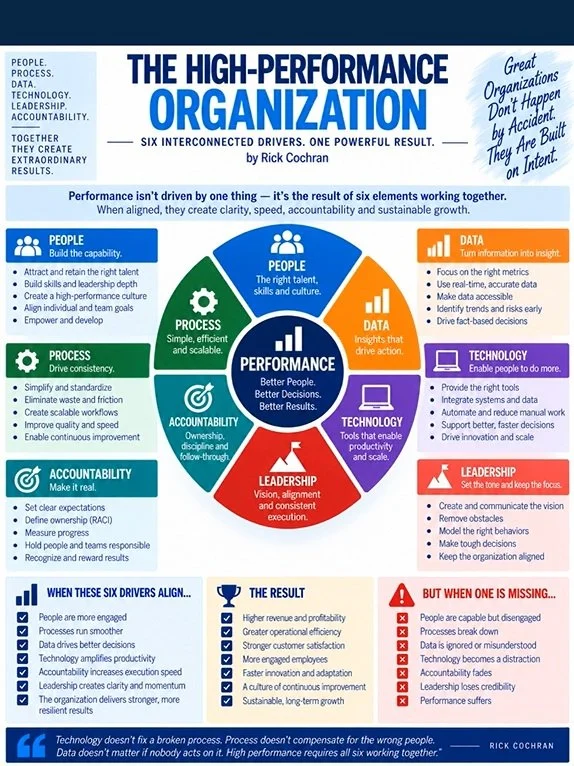
Most organizations do not struggle because they lack intelligent people, capable leaders, or hardworking employees. They struggle because execution is inconsistent—and inconsistent execution quietly becomes one of the most expensive operational problems a company can face.
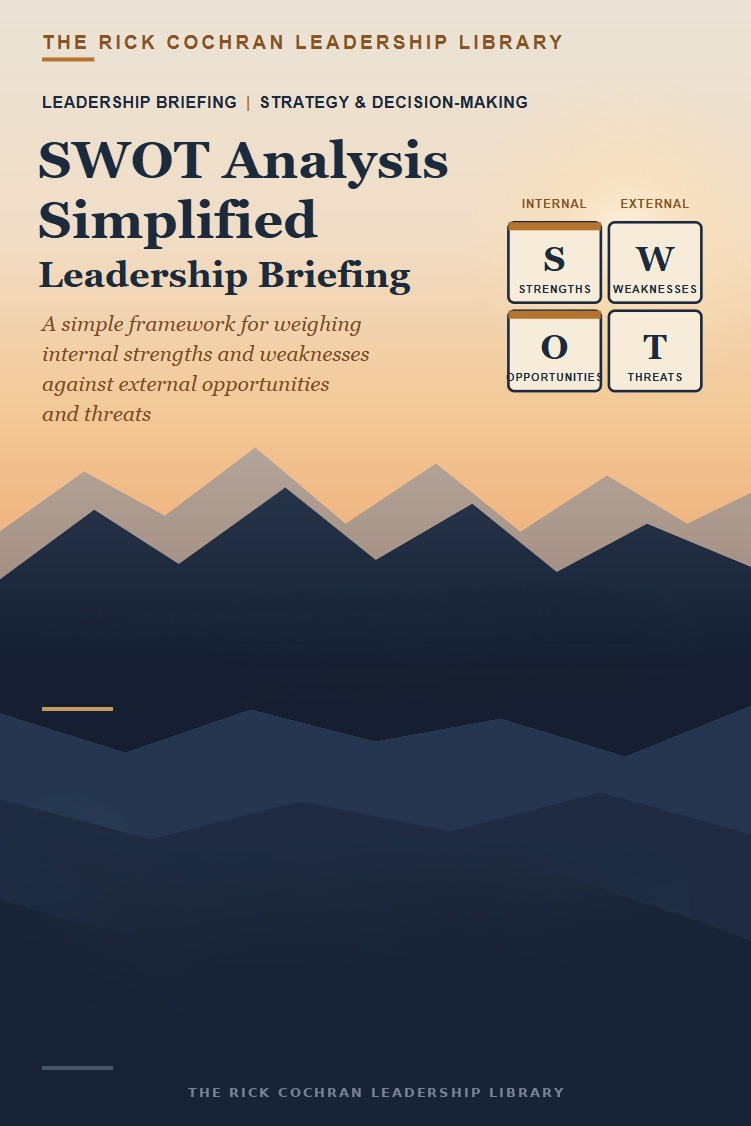
Most SWOT sessions produce a crowded grid, a brief sense of alignment, and a document that is rarely opened again. The problem is not the four-box framework itself. The problem is using SWOT to describe everything instead of deciding what matters and what must happen next.
Struggle is often interpreted as evidence that something is wrong: the goal is unrealistic, the timing is poor, or we are not capable. Yet resistance can carry useful information. When we stop fighting it long enough to understand it, the same experience that slows progress can become a source of insight, resilience, and better action.
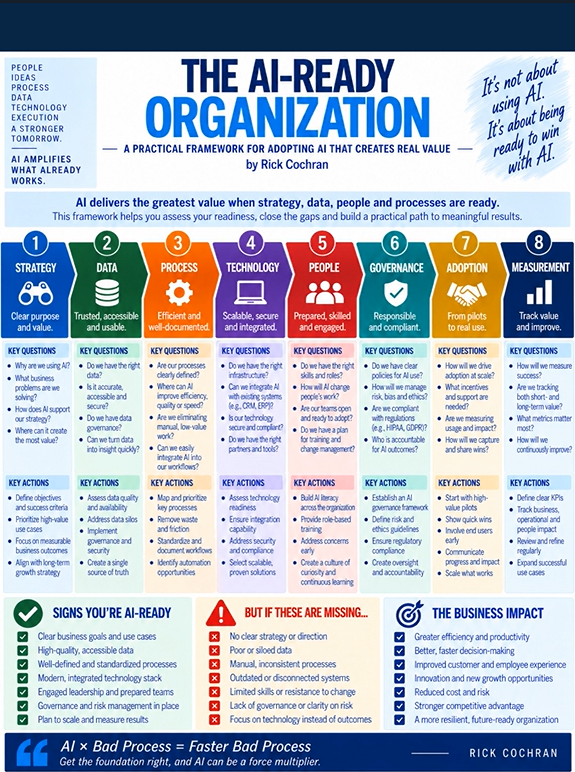
Artificial intelligence is changing how work gets done, how decisions are made, and how quickly organizations can move. But AI is not fundamentally changing how organizations perform. It is revealing how they already perform—how aligned they are, how clearly expectations are defined, and how consistently people execute when it matters.
Sales results are often described as a matter of talent, personality, or timing. In practice, durable performance is far less accidental. It comes from knowing whom you serve, creating genuine value, preparing people to execute, measuring what matters, and improving the system with discipline.
Adult friendship often feels harder than friendship did earlier in life—not because people have lost the ability to connect, but because the conditions that once created connection automatically are no longer consistently present. Adult life disperses us across locations, responsibilities, and changing priorities.
Most leaders are trained to find problems, diagnose causes, and correct weaknesses. That approach is necessary at times, but when it becomes the dominant way of leading, it can drain energy, narrow thinking, and teach people to protect themselves rather than contribute their best ideas.
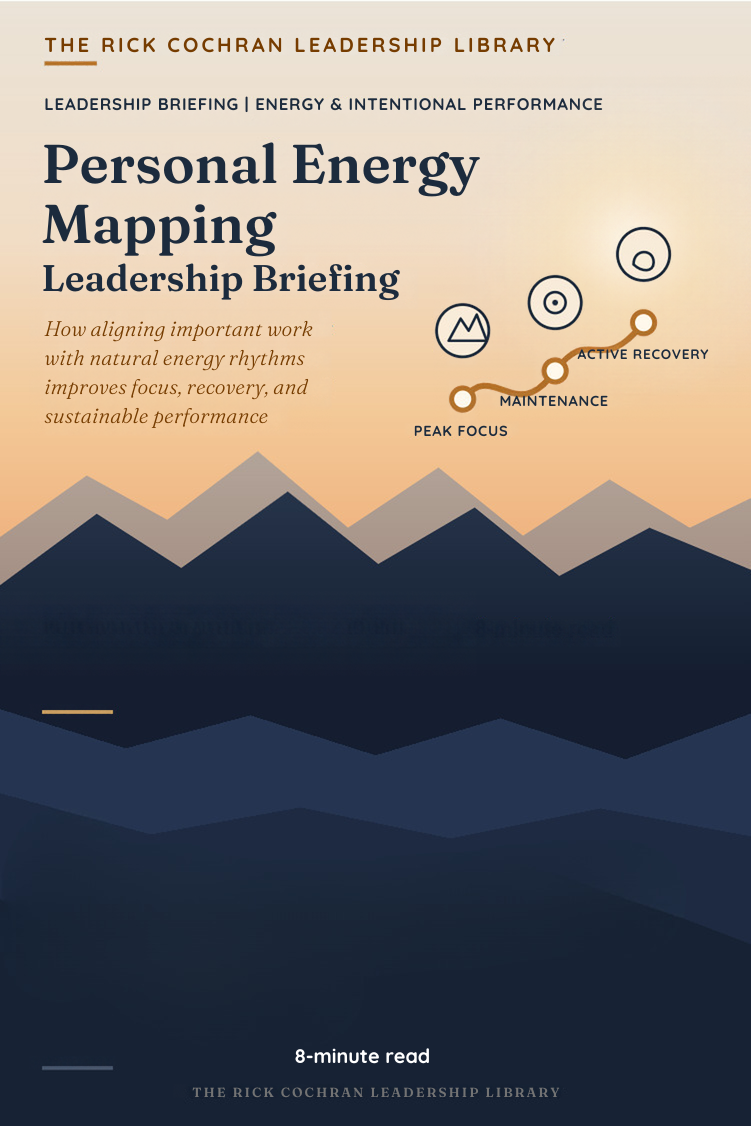
Most people try to solve overload by managing the calendar more aggressively. They rearrange meetings, build longer task lists, and push harder. But an open hour is not automatically a productive hour. The quality of the work depends on the energy, focus, and recovery available when that hour arrives.
For years, we have been taught to improve productivity by building a better calendar, prioritizing the list, and fitting more into the same twenty-four hours. But an available hour is not automatically a productive hour.
In my experience, organizations rarely struggle because people are unwilling to solve problems. They struggle because urgency pushes them toward the first visible explanation. The symptom is corrected, operations resume, and everyone moves on—until the same issue returns.
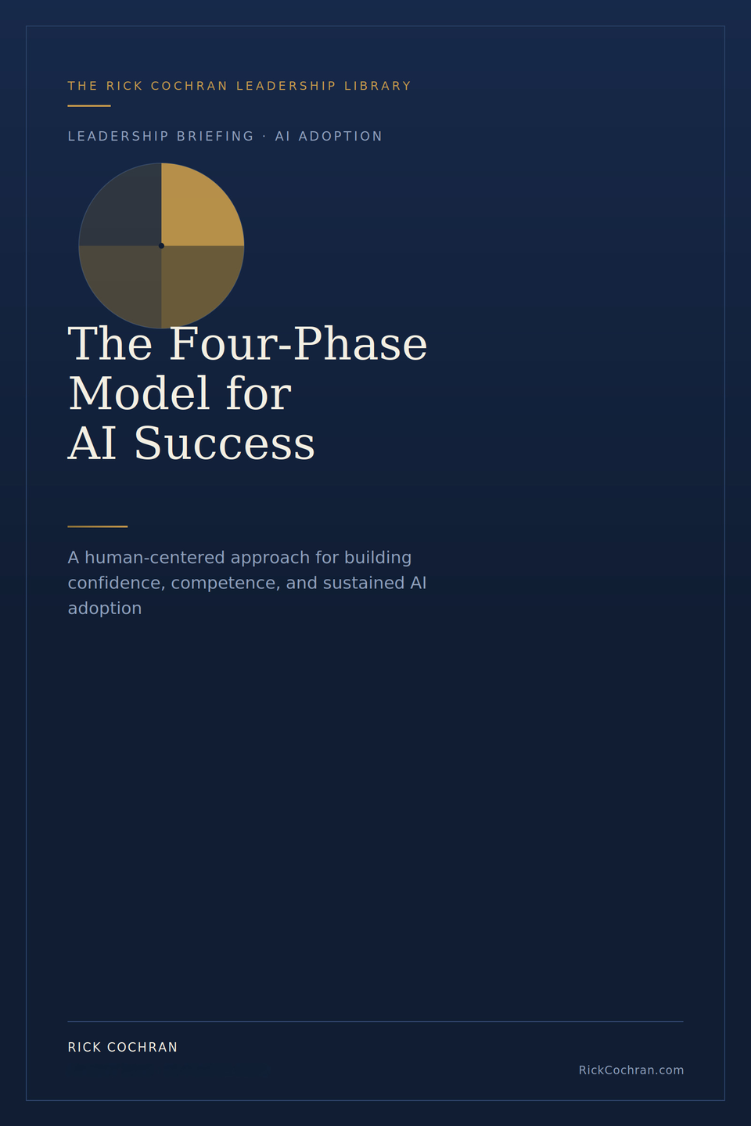
AI adoption changes how people work, make decisions, and apply expertise. Leaders must manage the human transition as deliberately as the technical rollout.
For years, we have been taught to improve productivity by building a better calendar, prioritizing the list, and fitting more into the same twenty-four hours. But an available hour is not automatically a productive hour.
Most AI initiatives do not stall because the technology fails. They stall because people do not understand what the change means for their work, identity, influence, or future.
A crisis rarely announces itself with enough time for leaders to design a response. Readiness is built beforehand—through disciplined risk assessment, clear reporting channels, defined responsibilities, practiced procedures, and a culture that takes warning signs seriously.
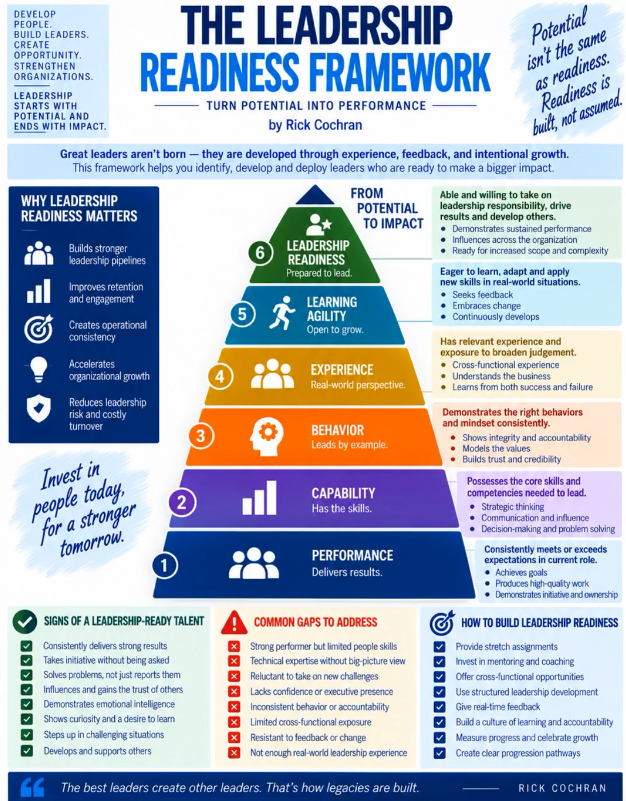
Self-awareness is the foundation of emotional intelligence. Leaders cannot regulate what they do not recognize, communicate clearly when hidden emotions shape the message, or understand others when their own reactions cloud perception.
The next stage of artificial intelligence will not be defined by who experiments the most. It will be defined by which organizations develop a clear methodology for deciding where AI belongs, how human and digital work should be coordinated, how quality and trust will be protected, and how value will be measured.
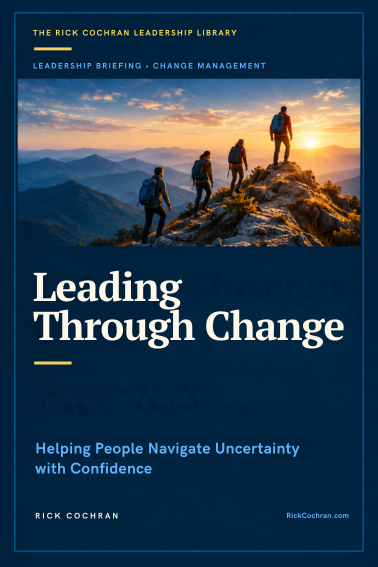
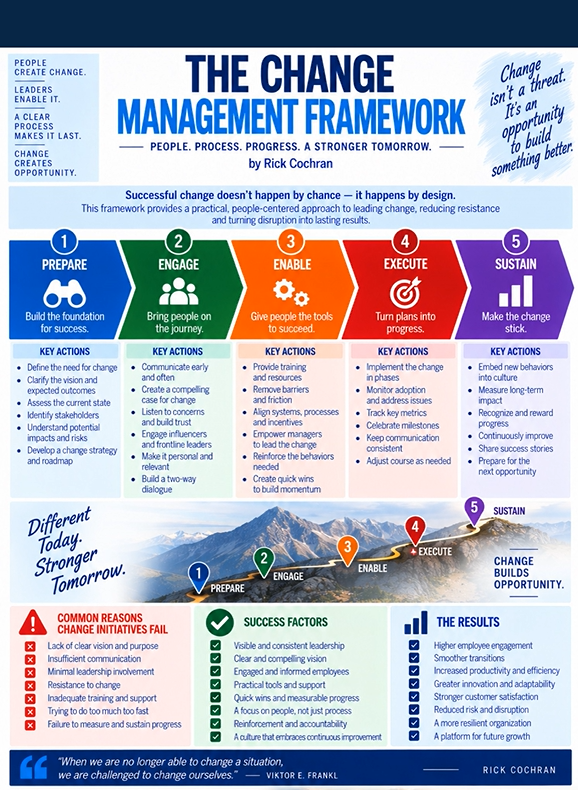
Change becomes progress when people understand why it matters, believe they can succeed, and know how to move forward. A new strategy, system, or structure creates possibility; leadership turns that possibility into sustained behavior and measurable performance.
Unconscious bias is not limited to intentional prejudice. It includes the automatic associations and assumptions people use to simplify complex information—often without realizing how those shortcuts influence judgment, opportunity, and treatment of others.
AI is moving beyond experimentation and isolated productivity tools. The next phase is operational: redesigning how work is assigned, how decisions are made, how customers discover and evaluate companies, and how leaders prove that AI produces measurable value.
Performance based compensation works when expectations are clear, ratings are calibrated, pay decisions consider market position, and every decision can be explained and defended.
Top closers are not defined by pressure, clever scripts, or how much they talk. They are distinguished by how well they guide a business conversation - uncovering urgency, making the cost of inaction visible, addressing risk honestly, and helping buyers reach a sound decision.
Managers make human-resource decisions every day, often without calling them HR decisions. Hiring, attendance, scheduling, coaching, documentation, leave requests, complaints, accommodations, discipline, and termination all carry consequences for the employee and the organization. The goal is not to turn every leader into an HR specialist. It is to help leaders recognize what they can handle, apply sound fundamentals, and involve HR before a manageable issue becomes an expensive one.