 Image 1 of 1
An effective board does more than meet, review reports, and approve recommendations. It contributes judgment, accountability, relationships, and perspective that materially improve the organization’s ability to fulfill its purpose. The central leadership question is not whether the board is active. It is whether its involvement adds more value than friction.
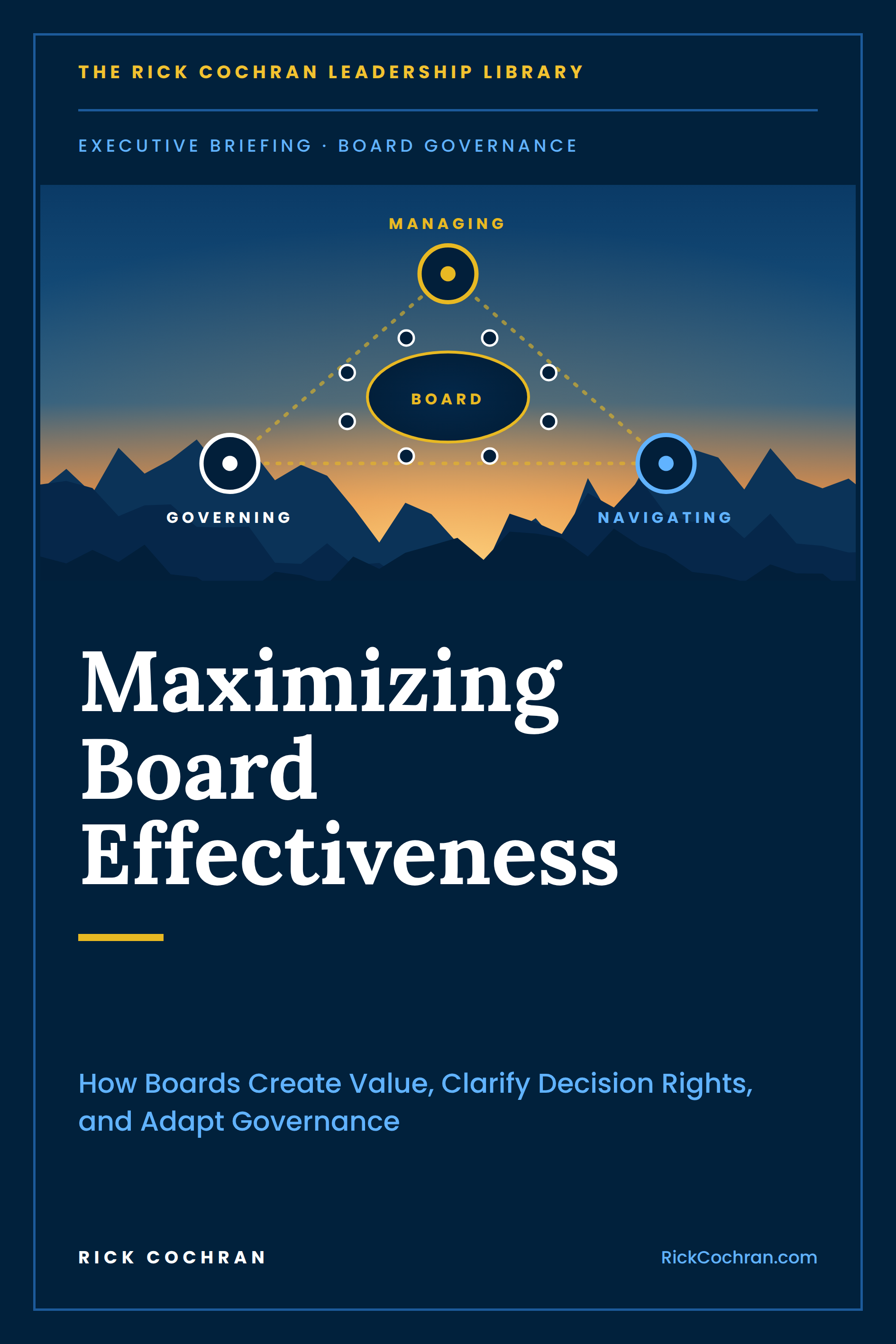
James C. Galvin’s practical governance model offers a useful answer: boards must adapt how they lead. At different moments, an organization may need a board to manage, govern, or navigate. The danger is not choosing one mode over another. The danger is operating in the wrong mode without recognizing it.