 Image 1 of 1
Strong ideas often fail for a simple reason: the story is fragmented. Leaders explain the problem, the technology, the market, the financial opportunity, and the next move as separate subjects. The audience is left to connect the dots on its own.
The better approach is to make the entire presentation one storyline. Every section should answer the question created by the section before it. That creates momentum, reduces confusion, and makes the recommendation easier to understand and act on.
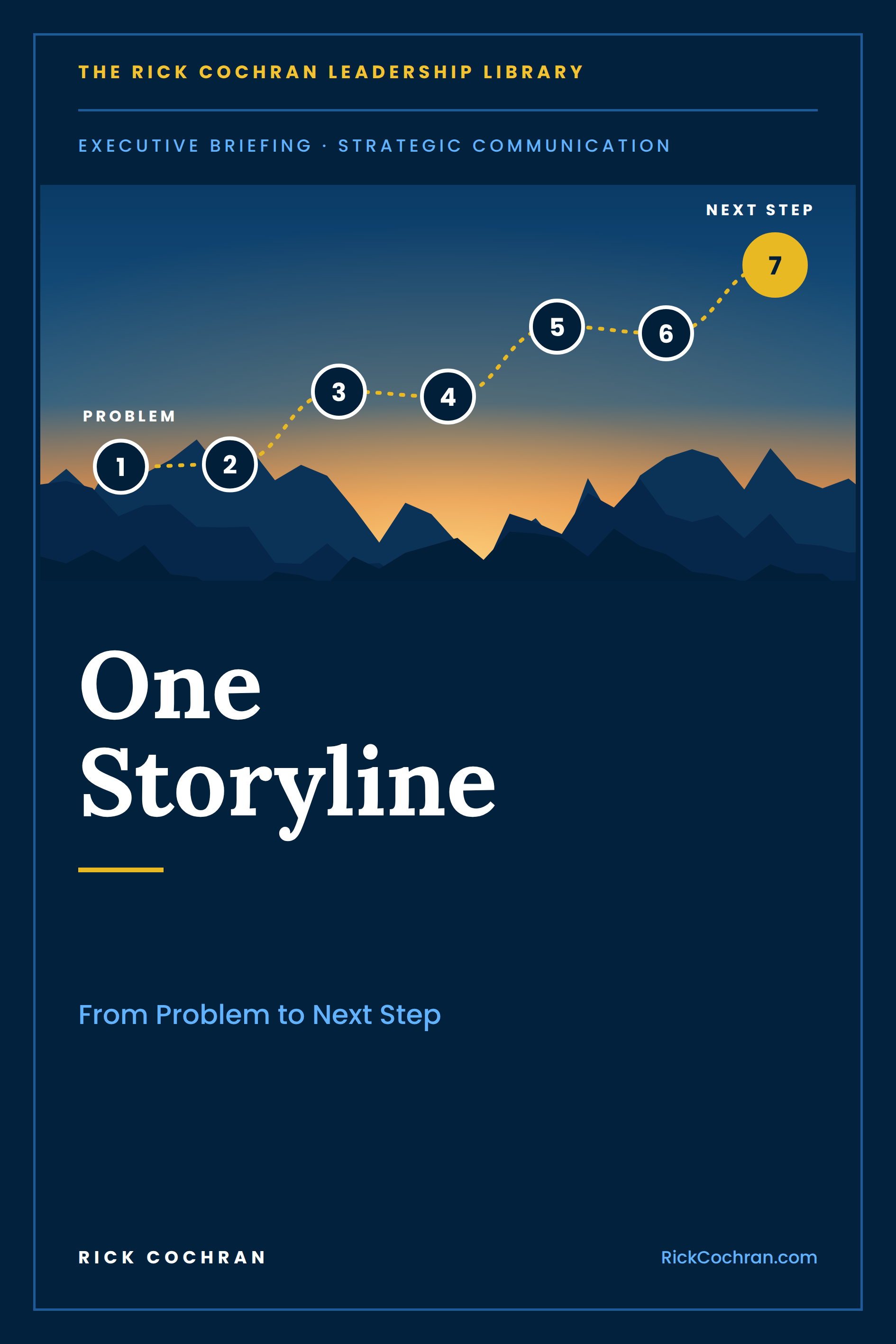
The framework is deliberately linear: Problem → Solution → Proof → Platform → Protection → Commercialization → Next Step. It works because it mirrors the way executive decisions are made. First, establish why change is necessary. Then show what is different, prove that it matters, demonstrate where it can scale, explain what makes it defensible, show how value will be captured, and finish with a specific action.